2. Cut the rush as close to the ground as possible.
3. Soak the rush in water to loosen the cortex or outer skin.
4. Strip the cortex end to end until the pithy center is exposed. A narrow strip of skin is left to hold the center together.
5. After peeling the rushes to about a quarter of its original thickness, thoroughly dry it for several weeks before the dipping process begins.


Grissets used to dip rush in fat
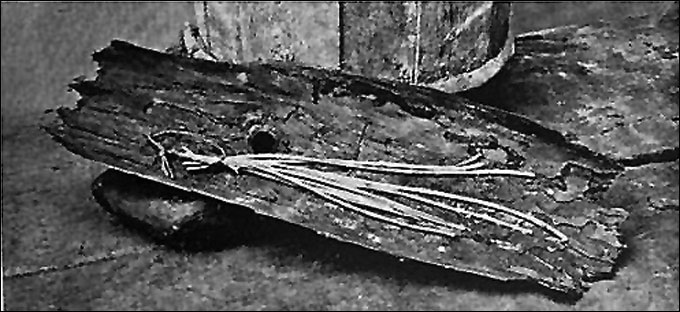
Rushlight after being dipped in grease
It is a greasy job and was not suited for the fingers of the mother who used her hands for needlepoint. "Mend the light" or "mend the rush" was the mother's words to her child to put up a new length.
Your rush is ready to burn in your rushlight holder. Many old time Englanders would lay their lighted rushlights on the edge of an oak chest or chest of drawers leaving an inch over the edge. It would burn up to the oak and then go out. The edges of old furniture are often burnt into shallow grooves from this practice.
Source: Text by Bryan Wright